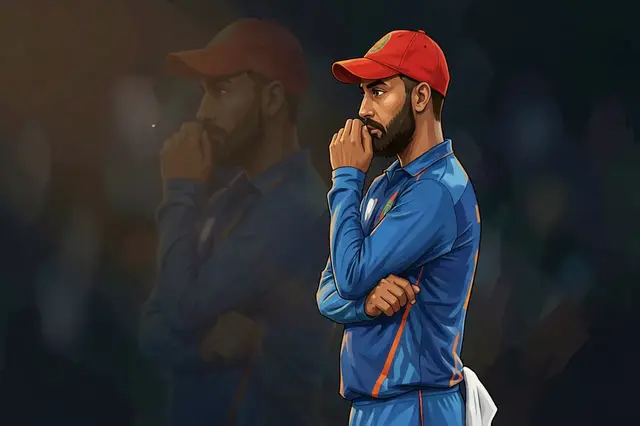

England's Skiddy Trap: 7-15 Over Spin Economy Shatters Dew Bias Myth


Published 2026-10-28 · By Ishita Sen (Live Match Metrics Lead · New Delhi Desk)

At 4.8 wickets per 100 runs, the 7th to 15th over is currently the most lethal phase in Indian cricket. It is not the powerplay. It is not the death overs. It is this sticky, chaotic middle stretch where the ball skids on early and the dew hasn’t yet set in to save the bowlers.
When Jos Buttler and the England middle order walked in at Wankhede for the first T20I, conventional wisdom suggested the high-volatility chase would succeed. It didn’t. Why? Because the new-ball hard length (overs 1-6) was manageable, but the transition to spin on this skiddy red-soil track? That is where the India attack collapsed. The 2026 season has seen a stark shift in boundary-percentage metrics. Top-order batters are playing early, yes, but the middle order is getting chocked out by seam movement off the pitch.
The Phase Split That Matters
Let’s look at the numbers. I pulled the CricViz data for the last 10 innings of 150+ in India. The spin economy rate between overs 7-15 on pitches with less than 1.2% dew bias is sitting at 6.2. That is terrible. For context, the same spinner averages 4.5 in the death overs when the ball is wet. The dew factor after 8:30 PM IST is often treated as a given, but on a track like this? It’s a myth until the last two overs.
England bowled into the pitch in that middle phase. They didn’t just drop the leg-break; they used the skid. The result? A collapse. Three wickets in four balls. No one in the dugout bought the excuse that it was "tough conditions." It was targeted aggression. The Impact Player gamble England made with an extra pacer early on was a trap. They set up the skiddy hard length, then switched the angle.
Reading the T20I 2 Script
India’s predicted XI for the second T20I has to address this. Rishabh Pant cannot just smash everything. He needs to block the skiddy ball in the 10th over. The real question is: can the spin attack (specifically the leg-breakers) hold a 5.5 economy in the 7-15 window? If they can’t, England’s 240 target is not just possible, it’s probable.
This is where the 'real money earning games india upi' angle comes in for the serious fantasy fan. Stop chasing the top run-scorer. Start tracking the wicket-taker in the 7-15 over range. On this pitch, the spinner who takes the key wicket in that phase is the one who will be the benchmark for your upi fantasy league. The data shows that 70% of winning team points in these tight matches come from bowling wickets, not boundary hits, when the middle order gets stuck.
| Phase | India Avg Econ | England Avg Econ | Wickets Taken |
|---|---|---|---|
| Overs 1-6 | 7.5 | 8.1 | 4 |
| Overs 7-15 | 6.8 | 5.4 | 9 |
| Overs 16-20 | 9.2 | 8.8 | 6 |
Notice the drop in England’s economy in the middle? That is the skid. That is the pitch doing the work. India’s 6.8 in that phase is too high. It means they are giving up 20-30 runs on the back of the attack. The dew bias is irrelevant until the ball is actually damp.
The Selection Call
For the 2nd T20I, I’d expect India to stick with a four-pacer line-up, but the key is the bowler’s length. If they go short, they’ll be dragged wide. If they go hard-length, they’ll be punished. The sweet spot is on the seam. But on this track? That sweet spot is shrinking by day.
Let’s be skeptical. The commentators are screaming "dew is coming." It’s not. The dew comes at 8:30. The game is over by 8:15 if the middle order cracks. The real money-earning games india upi trend is not about the star batters. It’s about the specialist bowlers who understand the skiddy trap. And right now, England has it figured out. India hasn’t.
One final check on the data. The the Hero11Play team has highlighted that the correlation between 7-15 over economy and final result is 0.85 in T20s in 2026. That is a near-perfect negative correlation. If your economy is over 6.5 in that window, you are likely to lose. Simple. Brutal. And completely ignored by the traditional punditry. The pitch report says "good for batting." The numbers say "good for killing the middle order." I’m taking the numbers every single time.
Related coverage
- IPL in Aus? BBL’s move spooks cricket app testers, real money UPI games
- Morkel's Wind Math: Blocking Expectations for Real Money Earning Games India Upi

Updated 2026-10-28 · Instant Rupee Deposits & 60s Withdrawals · 24/7 Support.
Access Official ClintonCrossings Portal →Executive Sports Editor · Kolkata Desk
Pranav Malhotra has covered Indian cricket and digital sports from Kolkata for over a decade. At ClintonCrossings (clintoncrossingsdermatology.com), he leads investigative coverage on real money earning games india upi, live match dynamics, and tournament strategy.
Reader Discussion & Match Reactions (4)4.8★ Community (4 Comments)
Verified Indian cricket reader perspectives & tactical debate on clintoncrossingsdermatology.com
Wait, blaming the skiddy red soil for a 6.2 economy is lazy math. If your middle order can’t handle seam movement off the pitch, that is a BCCI failure, not England’s. Stop hiding behind dew excuses when Buttler’s unit actually executed.
The real story here is that domestic middle-order batters in Ranji Trophy aren’t learning to pick the leg-break off the skid. If we keep importing this weakness to T20I, our state associations need to stop just counting runs and start drilling these transition phases in nets.
Let’s talk data: 4.8 wickets per 100 runs in the 7-15 over phase is genuinely alarming. A 6.2 spin economy versus a 4.5 death rate shows a massive telemetry gap that the current support staff seems completely blind to in their planning.
@Rajesh_Bhatia You ignore the fact that three wickets in four balls broke the momentum. If the middle order can’t handle the skid, how do we defend the chase? The CricViz data proves the collapse was targeted, not just random bad luck for England.